 Društvo za cistično fibrozo Slovenije
Cystic fibrosis (CF) is the most common, often fatal, autosomal recessive disease, meaning it is a genetic disorder that manifests in a child if the child inherits a defective gene from both parents. Due to a gene mutation, approximately 1 in 5,000 newborns is affected each year, and every 25th person is a carrier of the mutation. Taking these data into account, 3 to 4 children with cystic fibrosis are born in Slovenia each year. Assuming their average life expectancy is around 30 years, there are approximately 100 patients with cystic fibrosis in Slovenia.
According to data from abroad, the prognosis of the disease has improved significantly, as most patients with cystic fibrosis are treated in specialized centers providing high-quality care. These centers involve a multidisciplinary team of specialists, including specialist physicians (pediatricians, internists, pulmonologists, infectious disease specialists, microbiologists), specialized nurses, physiotherapists, dietitians, social workers, pharmacists, and clinical psychologists. Since cystic fibrosis affects multiple organ systems, physicians from other medical specialties (gastroenterologists, endocrinologists, otorhinolaryngologists, gynecologists) are often involved in treatment as well. Thus, a broad range of specialists is involved, coordinated by a physician experienced in the treatment of cystic fibrosis. Some aspects of treatment change from infancy through childhood to adulthood, but the basic approach remains the same.
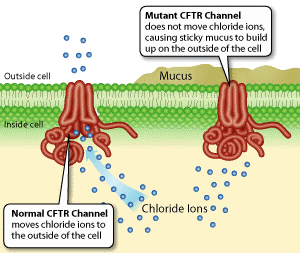
The fundamental defect in cystic fibrosis is impaired transport of sodium and chloride ions in the epithelial cells lining the external and internal surfaces of organs. In the lungs, this disorder results in a relative lack of water in the airway mucus and reduced efficiency of mucus removal by the cilia of the mucous membrane, known as mucociliary clearance. This creates favorable conditions for early lung infections and the development of chronic infection.
The main cause of morbidity and mortality is lung disease. Symptoms affecting the gastrointestinal tract, liver, and gallbladder are also present, and secondary conditions include diabetes mellitus and reduced bone density (osteopenia, osteoporosis). In addition, patients with cystic fibrosis may have involvement of the nasal organs (nasal and paranasal cavities and the nasopharynx), which manifests as difficulty breathing through the nose, reduced sense of smell, chronic sinusitis, and nasal polyposis. Repeated use of certain antibiotics can also lead to damage to the inner ear.
Treatment is focused on vigorous prevention of lung damage and malnutrition, as well as maintaining an appropriate quality of life.
The outcome of treatment for lung disease in cystic fibrosis is positively influenced by early initiation of airway clearance, known as respiratory physiotherapy. Parents of children with cystic fibrosis, and later the patients themselves, learn physiotherapy techniques that they regularly perform several times a day at home. This approach facilitates the expectoration of thick mucus that accumulates in the lungs. Prior to this, patients must inhale various medications via appropriate inhalers to reduce mucus viscosity and improve airway clearance. Lung infections occur very early in cystic fibrosis, so antibiotic treatment is necessary even in young children. As lung disease progresses and chronic infection develops, exacerbations often require treatment with intravenous antibiotics. In some centers abroad, appropriately trained parents and patients frequently administer intravenous antibiotic therapy at home. Episodes of exacerbation are usually accompanied by a decline in lung function until respiratory failure develops. Lung transplantation is currently the only option that enables patient survival. Therefore, it is especially important that parents regularly perform airway clearance in children with cystic fibrosis, often including structured physical activity programs. Regular respiratory exercise combined with physical training can significantly improve lung function in children with cystic fibrosis, with the assistance and cooperation of parents.
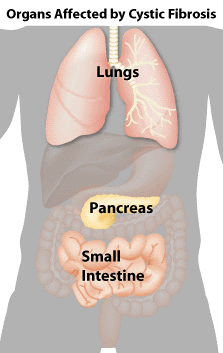
In patients with cystic fibrosis, the main causes of malnutrition are impaired digestion of nutrients in the gastrointestinal tract and impaired or incomplete absorption of nutrients in the intestines due to pancreatic dysfunction. The diet of a child with cystic fibrosis is, in most cases, based on increased energy intake. Some children with cystic fibrosis can maintain normal weight gain and growth for a period of time and develop accordingly; however, children with advanced lung disease soon require 50% to 60% higher energy intake than their healthy peers. Unfortunately, this dietary approach is often insufficient, making high-calorie supplements rich in vitamins and minerals necessary. As lung disease worsens, breathing difficulties and inflammatory changes resulting from chronic infection may lead to anorexia and increased metabolism, further complicating adequate nutrition. Malnutrition is associated with impaired lung function, making it important to maintain the prescribed body mass index, primarily through nutritional supplements. In some patients, additional nutrition must be administered via a nasoenteric tube (enteral nutrition), while in others even through a gastrostomy; appropriately trained parents can perform this at home as well.
Significant liver damage is a result of bile duct obstruction, which can lead to liver cirrhosis. In cases of disease progression, liver transplantation is required.
Cystic fibrosis–related diabetes is a serious condition and is often accompanied by worsening pulmonary symptoms and deterioration of the patient’s general condition, which may also be a cause of death.
Patients with cystic fibrosis also experience reduced bone density and, consequently, an increased risk of fractures. Decreased bone density usually appears during adolescence. Due to reduced bone density, patients with cystic fibrosis have an increased risk of fractures of bones and ribs. As a result, lung function and the ability to cough and clear the airways decrease, leading to worsening lung disease.
Women with cystic fibrosis are generally no less fertile than healthy women. Today, many women with cystic fibrosis have children, and as life expectancy increases, even more will choose to do so. Care for pregnant women with cystic fibrosis requires close cooperation between the healthcare team managing the disease and an experienced obstetric team. Almost all men with cystic fibrosis are infertile; however, with assisted reproductive technologies, many young men with cystic fibrosis are now able to have children.
With this approach to treatment, the patient’s quality of life and disease course can be significantly improved. With new treatment methods, patient care may further improve in the future; therefore, it is important that these patients receive medical care in specialized centers, with the involvement of a multidisciplinary team of experts and parents.
In addition to all these medical issues, the psychosocial aspect of cystic fibrosis is extremely important. In the initial period, the entire family must organize itself in a way that allows satisfaction for parents and other family members in addition to obligations. If life consists solely of responsibilities, it may quickly happen that a family member withdraws. Therefore, it is especially important to relieve parents of some burdens and enable them to remain at home with their ill child. As the child’s condition worsens and hospitalizations become more frequent, psychological distress deepens further. The final and very challenging period is lung transplantation, when the patient is confronted with death. Patients are usually referred for transplantation when the physician believes their life expectancy is only about one year. Consequently, many patients decide not to undergo transplantation, and opportunities for suitable donor lungs are limited. Approximately 40% of patients on the transplant waiting list do not survive to transplantation. In those for whom lung transplantation is successful, outcomes are improving, with current five-year survival rates around 60%. After lung transplantation, patients remain at high risk due to complications, organ rejection, and infections.
Although treatment of cystic fibrosis is purely symptomatic and lung transplantation remains the only option in advanced disease, it is anticipated that in the future the underlying defect may be corrected through gene therapy.
The prospects for significant progress in the treatment of cystic fibrosis in the future are good; until then, it is essential to keep the lungs as healthy as possible and to ensure the highest possible quality of life for patients with cystic fibrosis and their families.
CF in Slovenia
There are about 100 people who have CF in Slovenia. Most of them are treated at Pediatric clinic in Ljubljana, some at Pediatric clinic in Maribor, as adults on Hospital Golnik.
More about CF on Wikipedia.